
One credential can travel further than you intended
A customer forwards a saved QR image to someone else. If that code remains valid and is sufficient for entry, the recipient may be able to use it. The system records the credential used; that does not prove the named customer was the person at the gate. Individual access matters when you need to understand who was expected to visit.
Require the second check
With Bearbox’s QR-and-PIN access setup, both checks must succeed before access is granted. The customer also needs permission for that entrance and time. Someone with only the copied QR still needs the PIN. If both credentials are shared, the checks alone cannot establish who is using them.

FEDESSA Innovation Award winner
Bearbox won the Innovation Award at the 2023 FEDESSA European Self Storage Awards for Two Factor Authentication. See how the QR and PIN checks work together at the entrance.
Understand what “multi-factor” means
An authentication factor is a kind of evidence: something you know, such as a PIN, or something you possess, such as a credential on your phone. Two codes do not automatically provide independent factors. How credentials are issued, stored and paired matters. Ask which factors your entrance requires and what happens if one is copied.
A changing code solves a different problem
A rotating QR stops a saved image from remaining useful after its code expires. A second check makes a single valid credential insufficient. These controls can work together, but they are not interchangeable. Smart PINs and authenticator codes offer other credential options; assess the actual combination required at your entrances.


Give colleagues their own access
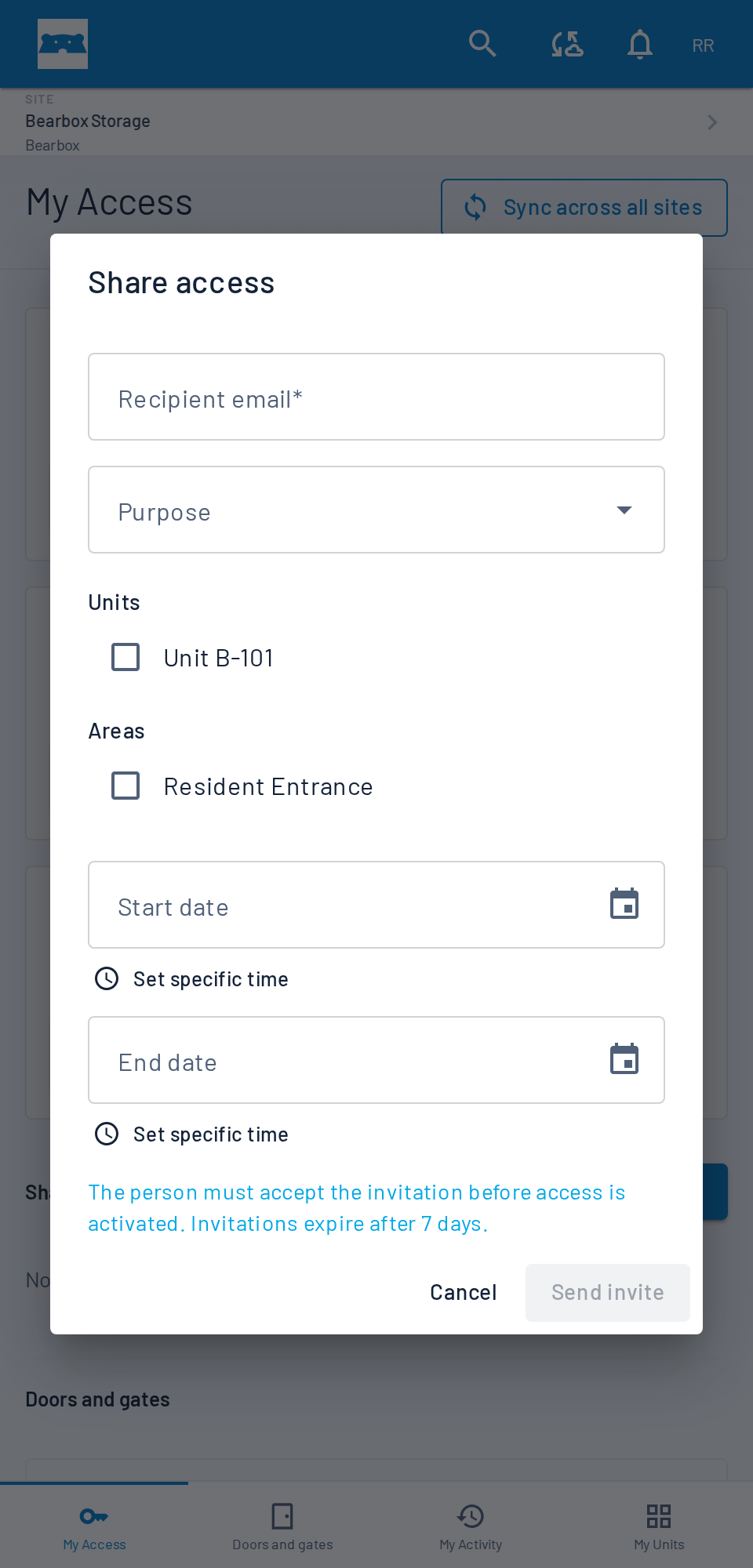
If a business customer needs colleagues to visit, an invitation is more useful than passing around the same code. Where access sharing is enabled, Bearbox lets invited people use their own profiles and credentials. Your team can see which person’s credentials were used, rather than treating several visitors as one account.
The gate is one part of the security story
Someone can follow another customer through an open gate without presenting any credential. After entry, they may still try an area they should not use. Pair MFA with access zones, unit monitoring and a response plan.